Choosing the right steel locker may seem simple, but the wrong choice can lead to daily storage problems. A locker may be too small for bags, difficult to access or fitted with a lock that does not meet the user’s needs. Good planning can help avoid these issues.
Schools, offices, hostels, factories and staff areas all have different storage needs. Therefore, you need to consider locker size, compartment layout, security, ventilation and build quality. The available floor space also plays an important role in your decision.
This guide covers the main locker types, sizes, features, security options and uses. You will also learn how to plan locker placement, estimate the number of lockers needed and avoid common buying mistakes before placing an order.
What Is a Steel Locker?
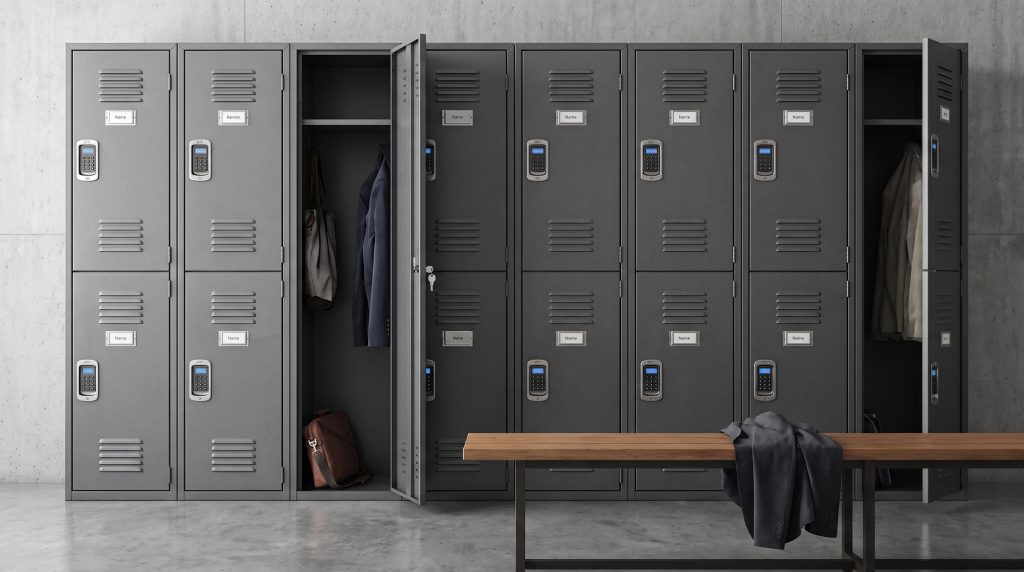
A steel locker is a locking unit which consists of sheet metal and is intended for keeping individual belongings, clothes, bags, books, or work tools. There is at least one compartment in a locker, and each of them contains a door and locking mechanism.
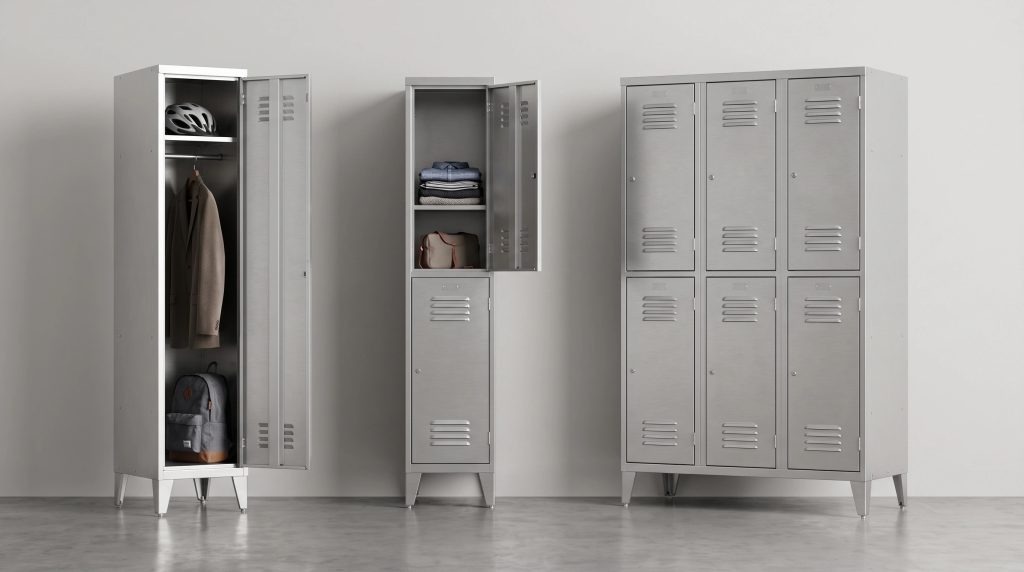
They vary in size and configuration. They may be full-length lockers for clothes and bulky bags or multi-door lockers in case several people require individual space. In addition, there are shelves, coat hangers, ventilation, and name plates in many types of lockers.
They are durable and easy to clean. That is why they are popular in places where they are used every day. These lockers are common in educational institutions, offices, hostels, factories, staff rooms, and change rooms.
Why Are Steel Lockers Used in Commercial and Institutional Facilities?
A wide range of commercial and institutional establishments require secure storage for multiple persons. It allows for individual storage while making sure that the facility maintains a neat and organised environment.
- Secure Storage: Having locking compartments makes it easier to secure one’s belongings, office supplies and equipment.
- Space Efficient: Multi-locker designs make it possible to store things for multiple persons without requiring too much space.
- Durable: The steel material is able to withstand repeated operations over time.
- Easy Maintenance: The smooth surface allows for easy cleaning and maintenance of the lockers.
- Versatile: Different locker designs suit various purposes, including schools, offices, hostels, factories, among other places.
These are the reasons why they are a practical option for facilities requiring storage solutions.
How to Choose the Right Steel Locker
Choosing the right steel locker starts with understanding who will use it and what they need to store. You should also consider the available space, security needs and how often the locker will be used.
Consider the Storage Needs
Consider the contents that will be stored there. For example, clothes and big luggage require much more storage than books and personal effects.
Check the Available Space
Measure the available height, width and depth of the installation site and ensure that the locker doors can open without getting in anyone’s way.
Choose the Right Configuration
Single-tier lockers offer much more vertical space, while multi-compartment lockers are more efficient when it comes to the number of users.
Decide on the Security Level
Select the type of lock depending on the environment and the contents that will be stored there. There are key locks, padlock fittings and combination locks.
Different Types of Steel Locker Configurations
Steel lockers come in different configurations to suit various users, items and spaces. Choosing the right layout helps you provide enough storage without wasting available floor space.
Single-Tier Lockers
Single-tier lockers provide one tall compartment for each user. They are a good choice when people need to store larger or longer items.
- Suitable for coats, uniforms and workwear
- Provides space for backpacks and larger bags
- Can include shelves, hooks or hanging rails
Single-tier lockers work well where each user needs plenty of personal storage space.
Two-Tier Lockers
Two-tier lockers have two separate compartments placed one above the other. They provide storage for more users while making good use of vertical space.
- Suitable for bags, clothing and personal items
- Provides separate storage for two users
- Uses less wall space than two full-height lockers
This configuration offers a good balance between storage capacity and available space.
Multi-Compartment Lockers
Multi-compartment lockers divide one unit into several smaller sections. Four-door and six-door models are common in places where many people need individual storage.
- Provides separate compartments for several users
- Suitable for books, bags and personal belongings
- Works well in schools, offices and hostels
Multi-compartment lockers are a practical option when user capacity is more important than large storage space.
Banked Lockers
Banked lockers consist of several locker units installed side by side. They create one organised storage area for a larger number of users.
- Makes good use of long wall spaces
- Allows many lockers to be installed in one area
- Makes numbering and user allocation easier
Banked lockers are well suited to larger schools, offices, hostels and staff facilities.
What Features Should You Look for in a Steel Locker?
The qualities define the degree of safety, convenience and ease of use of the item. It is worth looking beyond its dimensions and focusing on those qualities that make the locker practical.
- Strong construction: The steel material, well-working doors and good hinges make the locker able to withstand frequent use.
- Secure locking system: The key lock, padlock fittings or combination lock may be an appropriate means of protection in different environments.
- Ventilation slots: Ventilation promotes reduction of moisture and odours, especially in the case of storing clothes or footwear.
- Useful fittings: Shelves, coat hooks and hanging rails make it easier to organise different items.
- Durable finish: The special treatment of the surface provides protection from scratching and corrosion.
The best features depend on where the locker will be installed and what users plan to store inside.
Steel Locker Security Considerations
Security is an important factor when choosing a steel locker, especially when users store personal items, documents or work equipment. A strong locker should protect its contents while remaining simple to access.
Choose a Suitable Lock
Key locks are easy and well-known, whereas padlocks provide a fitting which enables users to control their own locks. Combination locks will minimise the issue of controlling the keys.
Check Doors and Hinges
A good lock offers minimal security if the door or the hinges are not strong. It is advisable to use strong doors and hinges along with a firm frame when opening the locker.
Consider the Stored Items
The type of security should depend on the worth of the items. Lockers storing laptops or costly machinery may require higher security than lockers storing clothes and books.
Steel Lockers for Different Environments
The right steel locker depends on where it will be installed and how people will use it. Each environment has different needs for storage, security and daily access.
Schools and Colleges
School lockers need to handle frequent use throughout the day. They should also provide enough space for students to organise their belongings.
- Strong doors and hinges for regular use
- Enough space for books, bags and personal items
- Secure locks for individual storage
A suitable locker system can help keep classrooms and shared areas tidy.
Offices
Office lockers give employees a secure place to store their belongings during working hours. They are useful in both traditional and flexible workplaces.
- Storage for laptops, bags and personal items
- Compact designs that make good use of available space
- Convenient placement for easy staff access
Well-planned office lockers can help create a cleaner and more organised workspace.
Hostels and Dormitories
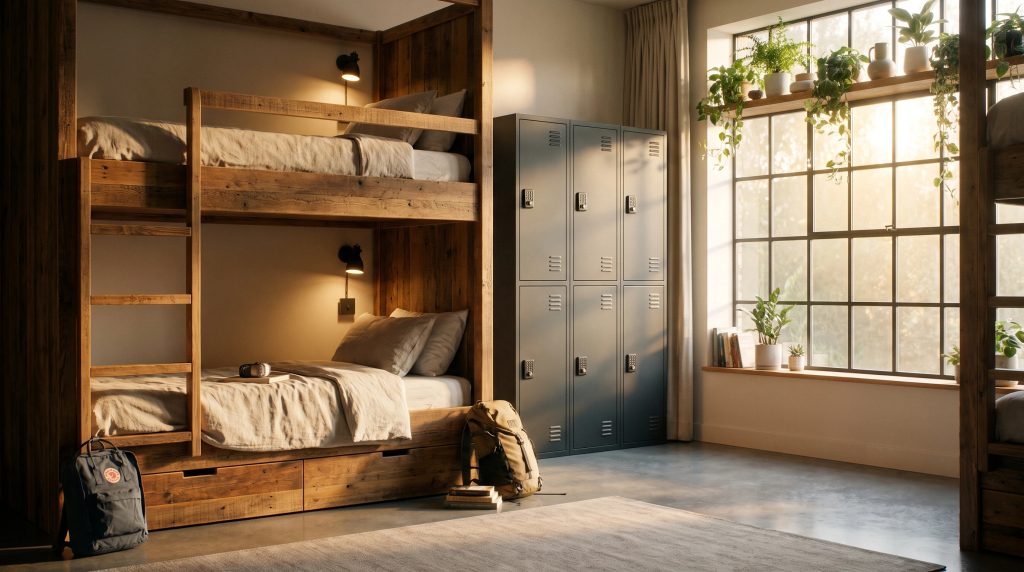
Hostel lockers provide private storage for people living in shared rooms. Larger compartments can offer enough space for everyday belongings.
- Space for clothes, backpacks and personal items
- Individual locks for better privacy and security
- Ventilation for clothes, shoes and other stored items
The right lockers can make shared rooms easier to organise and manage.
Factories and Changing Rooms
Workers may need lockers for uniforms, workwear and personal clothing. These lockers should be suitable for frequent use in busy staff areas.
- Good ventilation to improve airflow
- Enough internal space for uniforms, shoes and workwear
- Strong doors, hinges and locks for regular use
Suitable lockers can keep changing areas organised while giving workers secure personal storage.
Steel Lockers vs Other Storage Options
| Storage Option | Durability | Security | Maintenance | Best Suited For |
|---|---|---|---|---|
| Steel Lockers | High | High | Easy | Schools, offices, hostels and factories |
| Wooden Lockers | Moderate | Moderate | Needs more care | Offices and indoor spaces |
| Plastic Lockers | Good | Moderate | Easy | Wet and humid areas |
| Open Shelving | Moderate | Low | Easy | General and quick-access storage |
How to Plan Locker Placement in a School, Office or Hostel
Good locker placement makes storage easier to access without affecting movement through the building. Before installing a steel locker, consider available space, user traffic and door clearance.
Keep Walkways Clear
Place lockers where users can open the doors without blocking entrances, corridors or busy walking areas.
Choose Convenient Locations
In schools, lockers should be easy for students to reach. Office lockers can sit near staff or shared work areas, while hostel lockers should be close to users without blocking beds or doors.
Allow Enough Door Space
Measure the space in front of each locker. Users should be able to open doors and access their belongings with ease.
Plan for Cleaning and Maintenance
Leave suitable access around the lockers so staff can clean the area and carry out repairs when needed.
How Many Steel Lockers Do You Need?
The number of lockers that you require shall depend on the number of users and how the lockers shall be allocated. Consider the largest number of users at any particular time.
In educational institutions and hostels, a locker for each user is the easiest way out. For instance, if there are 100 users, then you need at least 100 compartments.
An office set up where employees work during shifts can have differing requirements. Where employees use the facilities during various periods, using the shared lockers reduces the total number needed.
It is also necessary to consider some extra compartments for new users and lockers that may be under repair. Most importantly, ensure that the compartments have enough space for what the users wish to keep.
Common Mistakes When Buying Steel Lockers
Buying steel lockers based on price or appearance alone can lead to problems later. A good choice should consider users, available space and daily storage needs.
- Choosing the wrong size: Small-sized compartments will not accommodate bags, uniforms, or work tools.
- Ignoring door clearance: The locker doors require adequate space to be opened without interfering with paths and furniture.
- Overlooking security: A poor-quality lock, door, and hinges will decrease locker security.
- Forgetting ventilation: Clothes, shoes or uniforms stored in lockers will require ventilation to prevent moisture and odours.
- Buying the exact quantity: Lack of additional compartments will cause storage problems for extra people or replacement of lockers.
Checking these details before ordering can help you avoid extra costs and make the locker system easier to use.
Steel Locker Maintenance Guide
Regular maintenance helps a steel locker remain clean, secure and easy to use. A few simple checks can also reduce wear and prevent small problems from becoming costly repairs.
Clean the Surface
Dust and marks on the locker should be cleaned using a soft cloth and a suitable cleaning agent. This step prevents scratching of the surface protection layer.
Check Locks and Hinges
The functionality of locks, handles and hinges needs to be checked in order to ensure smooth operation. All loose parts need to be tightened and replaced where necessary.
Watch for Rust and Damage
Examine the surface for possible damage – scratches, chipped paint and early rust. This step will help prevent corrosion of the steel.
Keep Vents Clear
Dirt and dust accumulating near ventilation holes should be removed. Clean vents ensure proper air circulation, especially for lockers storing clothing or uniforms.
Questions to Ask a Steel Locker Supplier Before Buying
Before placing an order, ask the supplier a few key questions. Clear answers can help you compare options and avoid problems after installation.
- What are the exact height, width, depth and internal dimensions?
- What type and thickness of steel is used?
- Which locking options are available?
- Does the locker include shelves, hooks or ventilation slots?
- What type of surface finish or coating is used?
- Does the price include delivery and installation?
- Can the lockers be fixed to a wall or floor?
- What warranty does the supplier provide?
- Are replacement locks, keys, hinges and other parts available?
- What is the expected delivery time?
These questions will help you choose a steel locker that meets your storage, security and budget needs.
Steel Locker Buying Checklist
Before buying a steel locker, review the main requirements to make sure it suits your space and users. Use this simple checklist before placing an order.
- Check the number of users who need storage.
- Decide what items will be stored inside.
- Measure the available height, width and depth.
- Choose the right locker size and configuration.
- Check that doors have enough space to open.
- Select a suitable locking system.
- Look for ventilation if storing clothes or shoes.
- Check the steel construction and surface finish.
- Confirm installation and fixing requirements.
- Ask about the warranty and replacement parts.
- Allow extra capacity for future users.
A clear checklist makes it easier to compare steel lockers and choose a practical option for long-term use.
Conclusion
Choosing the right steel locker starts with understanding your users, storage needs and available space. Size, configuration, security and build quality can all affect how well the locker works each day.
You should also consider where the lockers will be placed and what people will store inside. Features such as ventilation, strong locks and useful compartments can make storage safer and easier to manage.
Before buying, compare different options and check the product specifications carefully. Good planning can help you avoid common mistakes and choose lockers that provide secure, organised and practical storage for years.
Frequently Asked Questions About Steel Lockers
They provide a safe and organised place to store one’s possessions, clothes, bags, books, and other work equipment. It is widely employed in various institutions like schools, offices, hostels, industries, workplaces, etc., where many individuals require individual storage space.
Yes, steel lockers may ensure safety and security if they have a good door, robust hinges and an appropriate locking system. Depending on the surroundings, you can use locks such as keys, padlocks and combination locks.
The installation of ventilation systems is highly advised when lockers are to be utilised for the storage of clothes, footwear, uniforms or other material that may contain moisture. This will allow air circulation inside the storage space.
The lifespan of steel lockers varies according to their construction, coating, surrounding conditions, and usage. Regular maintenance, timely repair, and moisture protection of lockers can ensure that they remain in good condition for many years to come.
Clean your lockers with a soft cloth and a gentle cleaner to remove dust particles and marks. Also examine the locker’s locking system, ensure the ventilation slots are unobstructed, and address any scratching, chipping, or rusting.